Semrush Link Building Tool: Find Backlinks and Manage Outreach
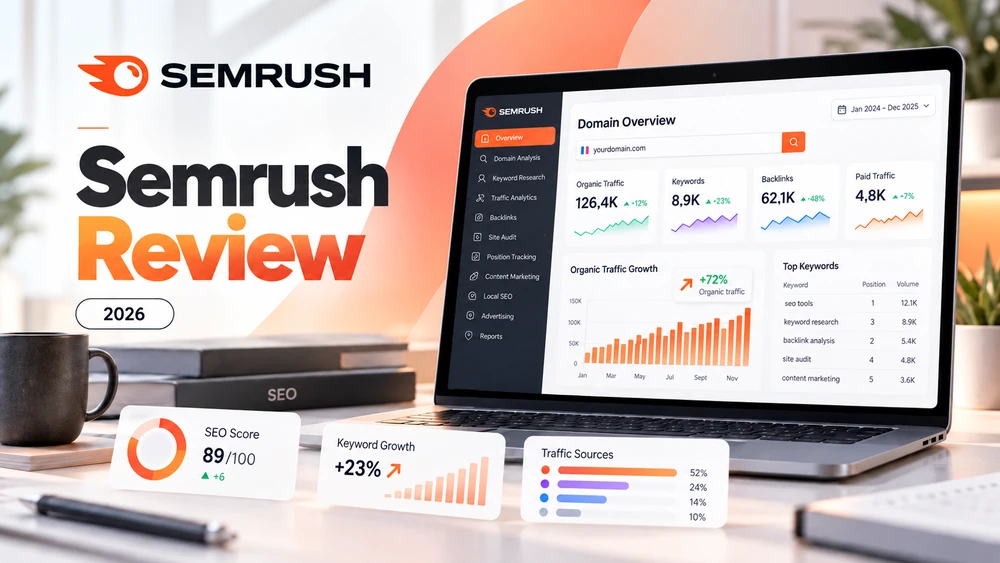
Use Semrush Link Building Tool to research appropriate editorial prospects, move qualified candidates into In Progress, prepare individual outreach messages and verify real published backlinks. It organizes work; it cannot guarantee links or rankings.
What Semrush Link Building Tool actually does
Semrush Link Building Tool is a workflow for researching websites that might cite your content, checking which prospects deserve attention, reaching out to relevant editors, and tracking follow-up work. It does not create legitimate endorsements by itself. A link only becomes useful when another publisher has a good reason to direct its readers toward a specific page of yours.
The practical starting point is an article, dataset, comparison or free resource worth citing. Rather than buying a subscription and collecting hundreds of domains, decide exactly which page you want a journalist, blogger or industry publisher to recommend. This guide explains Semrush's documented interface and editorial outreach principles; Claim26 does not claim to have run a paid outreach campaign or earned links from the examples below.
Link Building Tool vs Backlink Gap vs Backlink Audit
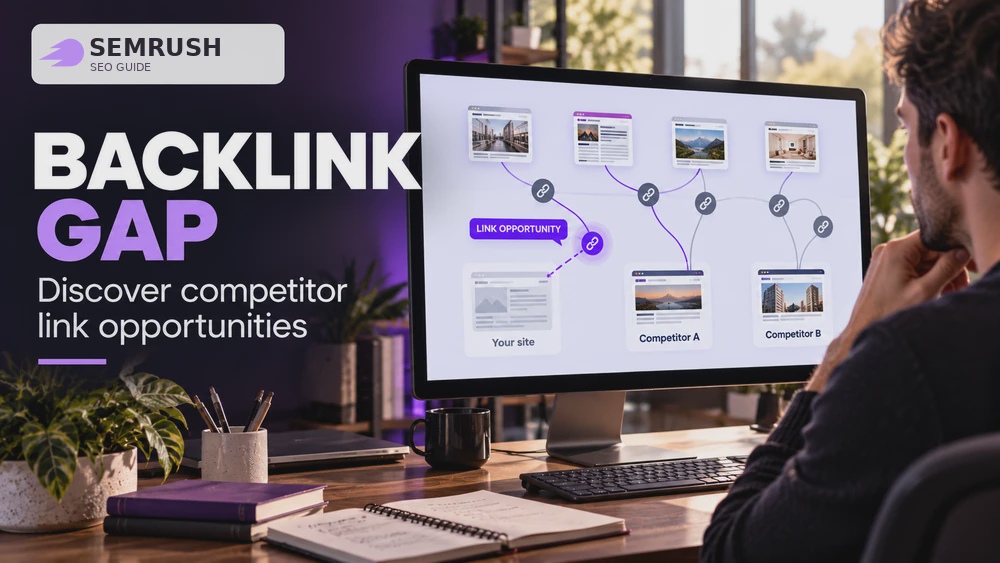
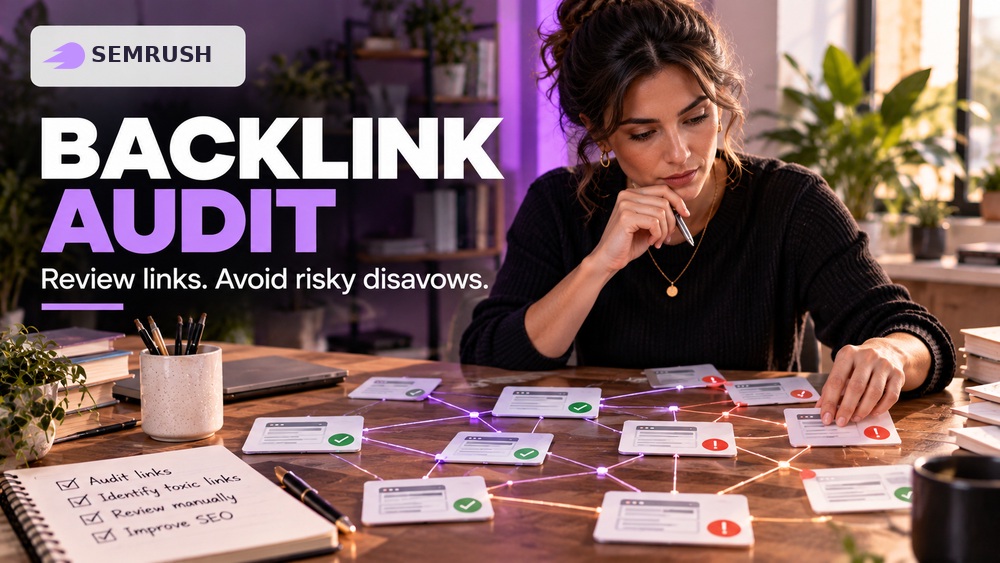
These three Semrush tools address different questions. Backlink Gap highlights websites linking to selected competitors but not to you, making it a discovery tool. Backlink Audit helps investigate your existing inbound links and review potential problems. Link Building Tool takes a list of opportunities into a contact-management process that covers prospect selection, outreach and follow-up.
If your concern is a suspicious backlink that already exists, start with Backlink Audit rather than contacting new publishers. If you are comparing rival websites to find overlooked referring domains, use Backlink Gap. When your next task is deciding whom to approach with a useful article and how to manage each response, the Link Building Tool is the relevant step. Mixing these intentions produces repetitive prospect lists instead of a focused campaign.
Before opening the tool, make something worth linking to
Pick one page that answers a question better than a generic product pitch. Suitable examples include a clearly sourced industry benchmark, an original troubleshooting checklist, a helpful calculator or a study explaining its method. A vague homepage usually gives an editor little reason to add a contextual reference, even when the site itself sells a good product.
Read the target page as a first-time visitor. Is its key information visible without completing a signup form? Are dates and sources clear? Does it display well on mobile? Can the page support the specific statement you plan to make in an email? If the answer is no, improve the resource first. A more polished pitch cannot make a thin or misleading destination genuinely relevant.
Step 1 — Create a Link Building Tool project
Open Semrush Link Building Tool and create or choose a project for the domain you want to promote. Semrush describes a setup using relevant target keywords and competitors to identify possible link sources. Enter terms that match the actual resource you will recommend, not an unrelated list of high-volume search phrases. Select competing sites that publish in the same market and cover similar problems.
For example, a B2B scheduling software company with an original guide to appointment reminders might investigate publications about service-business operations. A giant consumer electronics website is unlikely to be a meaningful competitor for that campaign simply because it has more links. Keep the project domain, target page, geographic audience and chosen topics together in a short brief.
Step 2 — Read the Prospects tab without trusting every score
After the project is configured, the Prospects tab shows possible websites and Semrush's accompanying indicators. The interface may display URL categories, an Authority Score and a rating. Treat these as reasons to inspect a candidate, not as endorsements or promises that a backlink will be earned. Open the actual website and find a specific article where your material would add context.
Check editorial relevance, authorship, current activity, source quality and whether the publisher cites independent resources. A modest specialist publication can be more suitable than a large site that barely discusses your topic. Reject obvious link-selling networks, irrelevant directories and sites that exist mainly to exchange links. Aim for a short list of defensible opportunities rather than a spreadsheet filled with impressive-looking scores.
Step 3 — Turn the promising prospects into an outreach queue
Semrush documents the To In Progress action for moving a selected prospect into the In Progress workspace. Use this queue only for candidates that have passed your manual review. For each one, record the page you intend to discuss, the exact URL on your site, the proposed reason to reference it, and the status of any previous contact.
Backlink Gap can also feed candidates into a Link Building Tool project, but an opportunity is not a relationship. A competitor being cited by a publication does not mean you deserve the same link. Approach the editor with a distinct contribution. If you cannot identify a sentence or topic their readers would genuinely benefit from, leave that prospect out.
Step 4 — Find the right contact and assess email permissions
In Progress provides a Contact action for preparing outreach emails. Semrush explains that you can connect a mailbox and edit the subject, recipient and message in its interface. Before authorizing an email connection, check what permissions are requested and whether your organization allows third-party tools to manage outbound correspondence. Using your normal email software is a valid alternative if you want more direct control.
Choose an editorial contact or a published contact channel associated with the article. Do not assume that any scraped address permits bulk promotional messaging. Requirements for unsolicited marketing emails vary by country, recipient type and context. Limit the personal data you record, respect opt-outs and consult the rules that apply to your business instead of treating a built-in Send button as permission.
Step 5 — Write an outreach email that refers to a real page
A concise message should explain three things: which piece of the publisher's work you read, what precise gap your resource could help fill, and where the editor can check the relevant information. Avoid an empty compliment, an exaggerated claim about your expertise or an instruction to use keyword-stuffed anchor text. Let the recipient decide whether a link is editorially appropriate.
For example, a hypothetical SaaS company could write: Your guide to managing no-show appointments mentions reminder timing; we published a sourced checklist comparing reminder channels and consent considerations, which might be a helpful reference for that section. This is an illustrative message, not one sent by Claim26. Personalization means your proposed source must really fit the recipient's page, not merely inserting a first name into a mass template.
Step 6 — Keep follow-ups restrained and stop after a refusal
Semrush describes follow-up features within the contact workflow. These can be useful for keeping track of conversations, but they are not a reason to flood an editor with repeated automated requests. Before any additional email, confirm that your message reached an appropriate address, that sufficient time has passed and that the request is still genuinely relevant.
Distinguish a reply from a publication decision: an editor may thank you, ask for details, decline or make no commitment. A refusal should end the solicitation. If your contact is not interested, do not add the person to another sequence simply because your outreach dashboard suggests sending the next step. Respectful, limited outreach protects the relationship even if no backlink results.
Step 7 — Check a published backlink, not just an email status
A positive response is not a backlink. Once a link is supposedly live, open the exact source page and confirm that it leads to the correct URL on your website. Check the surrounding sentence for accuracy and see whether the reference remains accessible. Track confirmed links separately from prospects, messages, replies and promises to publish.
The tool's campaign monitoring can help you organize this work, but the page itself remains the decisive evidence. If you have suitable analytics, review referral visits separately from search impressions and rankings. A link might bring qualified readers even without a measurable ranking change. Never convert the number of emails sent or potential domains found into claims about organic traffic, conversions or revenue.
How to judge whether a prospective backlink is worthwhile
Ask whether the linking site serves an audience that could realistically use your resource. A reference in an authoritative, highly relevant guide is often easier to justify than a placement on a disconnected page whose only attraction is a strong estimated domain score. The surrounding content matters: readers should understand why the link is there without seeing an artificial promotional sentence.
Useful checks include topic fit, accuracy, publication maintenance, transparency about advertising and the actual location of the proposed link. A lower-traffic niche publication may send better-matched visitors than a broad directory. Semrush's figures can support initial prioritization, but they do not replace editorial judgment or provide a guaranteed estimate of the value of a future link.
What Google counts as link spam
Google's spam policies identify links created mainly to manipulate search rankings as a risk. Examples include paying for links that pass ranking credit, excessive reciprocal link exchanges and programs that automatically create backlinks. A prospect selling dozens of guaranteed followed placements is not an ordinary editorial opportunity just because its sales message refers to quality or authority.
Legitimate advertisements and sponsorships can involve paid links, but Google says such links should be properly qualified, for example with rel=sponsored or rel=nofollow. Disclosure and link attributes address a different situation from asking an editor to cite a useful, independent resource. Avoid suggesting that Semrush can guarantee backlinks, bypass Google's policies or certify that a placement will improve rankings.
A practical campaign example for a small B2B website
Imagine a small company publishing an original comparison of how appointment reminders affect customer experience. Its research page explains how the comparison was assembled and the limits of its evidence. The company searches for a handful of specialist blogs and trade publications covering appointment management, then checks one article at a time for a legitimate gap the comparison could help fill.
The team places only qualified prospects into In Progress and drafts a brief, page-specific message. It documents responses and verifies any eventual published links. No traffic increases or response rates are assumed. This fictional example shows why a campaign of carefully selected contacts can be more meaningful than an impressive number of scraped domains. The same reasoning applies to independent consultants, niche publishers and software reviewers.
Can you use Semrush Link Building Tool for free?
Semrush's published comparison of link-building products describes limited free use for one Link Building Tool project, with broader project access associated with its paid SEO offering. Those terms were stated in provider material and may change by region, account, plan or product bundle. An article cannot promise that every outreach feature, connected mailbox or project allowance will remain free.
Before subscribing, open the current Semrush pricing page and check which exact tool, number of projects and contact-management functions are available in your account. Compare monthly and annual commitments and any additional products or user charges. The lowest advertised price is not necessarily your final checkout amount; taxes, billing term and account entitlements can affect the real cost.
When the tool is useful and when a spreadsheet is enough
Link Building Tool is more compelling when you manage many carefully researched prospects across repeat campaigns and need one place to track outreach. If you have one informative article and only a few potential editorial partners, a simple spreadsheet and individual emails may be sufficient. Software can reduce administrative friction; it cannot supply a convincing reason for another website to cite your page.
Start with a single resource and a small, qualified outreach list. Record your time spent, relevance of the leads, any verified links and referral visits, if measurable. Only then decide whether a subscription improves your working process enough to justify its cost. Claim26 may earn a commission when you use its disclosed Semrush affiliate links to make an eligible purchase; this does not guarantee better outcomes.
Final checklist: from research to a confirmed link
Choose one source-worthy page; list the audience and relevant topics; configure a Semrush project; inspect Prospects individually; move only relevant candidates to In Progress; identify the appropriate editorial contact; write a short message tied to a real article; respect privacy and refusals; and verify every published link before treating the campaign as successful.
Keep a separate record of project costs, outreach activity, secured backlinks, referral traffic and any resulting business outcomes. These are different measurements and should not be combined into a fabricated performance claim. Semrush is one possible way to organize the process. A useful resource and trustworthy editorial relationships remain more important than a large outreach dashboard.
Check these four signals.
✓Promote one helpful page with verifiable information.
✓Review every candidate beyond automated authority scores.
✓Send relevant, respectful messages and honor refusals.
✓Count only backlinks confirmed on live external pages.
✓Check actual Semrush plan limits before subscribing.
The safest way to choose is to build a small real-world workflow.
Test the part of the customer journey that matters most before moving your entire system.
Official sources for this guide
Software pricing and features can change. Review the official documentation below before choosing a product or plan.