Systeme.io Free Plan in 2026: What Can You Actually Build for $0?
The Free plan is a permanent $0 tier with no credit card required. Its current limits are large enough to validate a focused first funnel and a small real-world customer journey.
The Free plan is a permanent $0 entry point rather than a short trial
Systeme.io currently lists a Free plan at $0 and states that no credit card is required. The plan does not expire like a conventional free trial, which means you can keep a small working setup on the free tier while it remains within the published limits.
That changes how the product should be evaluated. Instead of rushing through a temporary trial, you can build one real customer journey, send actual follow-up emails and see whether the system fits your working style before you introduce another recurring expense.
You can build a genuine first funnel within the free limits
The current Free plan supports up to 2,000 contacts, three sales funnels, one automation rule, one workflow and one custom domain, with unlimited email sends listed among the core allowances. That is enough for a focused first offer and a small audience.
A realistic setup could contain a lead-capture page, a short nurture sequence, an offer or checkout step and a thank-you page. Keep the structure simple enough that the free limits force you to learn which parts of the journey actually contribute to a conversion.
The most important limits appear when the business becomes more complex
The free tier is intentionally constrained. Multiple offers, many automation paths, several custom domains or a growing contact database can eventually make the limits restrictive. Those are useful upgrade signals because they correspond to real activity rather than hypothetical future needs.
Do not upgrade merely because a paid plan looks more professional. If you are still below the free limits and the offer itself has not been validated, extra software capacity will not solve a weak proposition or a lack of qualified traffic.
Use the free plan to validate conversion before optimizing infrastructure
Build the smallest complete route from first visit to the desired action. Test the headline, lead capture, follow-up and offer. A working path gives you evidence about the message and the audience before you spend money on additional capacity.
Once leads or sales arrive, the account itself shows you what is becoming restrictive. At that point, the choice between Free, Startup and the higher tiers becomes much easier because it is tied to usage you can measure.
Startup becomes relevant when a specific free-tier limit gets in the way
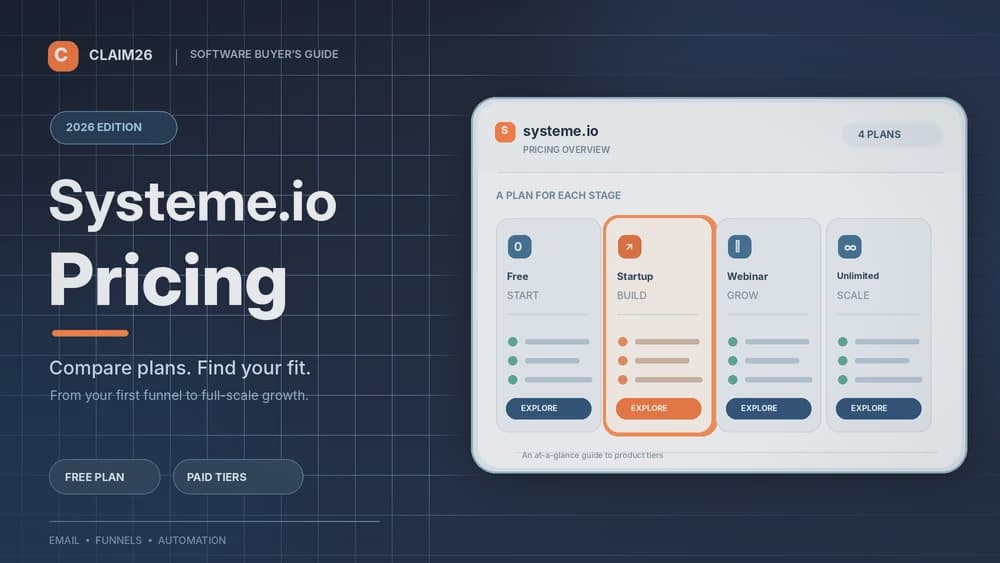
Startup is currently listed at $17 per month and increases the published capacity to 5,000 contacts, 10 sales funnels, 10 automation rules, five workflows and three custom domains. The value is additional room for an operation that already needs it.
Write down the limit you are hitting before you pay. If the answer is clear, the upgrade has an operational purpose. If you cannot name the bottleneck yet, the Free plan is usually still doing its job as a validation environment.
Best use: launch small, learn quickly, then pay for proven demand
The strongest use of the Free plan is not to avoid paying forever. It is to remove software cost as an excuse for delaying a first launch and to generate enough evidence to make the next decision intelligently.
Start with one offer and one conversion path. Keep the account free until a real limit affects growth or efficiency, then compare the paid tiers against that requirement. This keeps software spending behind customer demand rather than ahead of it.
Check these four signals.
✓You have fewer than 2,000 contacts
✓Three funnels cover your current launch plan
✓One simple automation path is enough to validate the offer
✓You want evidence before adding software cost
The safest way to choose is to build a small real-world workflow.
Test the part of the customer journey that matters most before moving your entire system.
Official sources for this guide
Software pricing and features can change. Review the official documentation below before choosing a product or plan.