Systeme.io Free Plan: Can You Start Without a Credit Card in 2026?
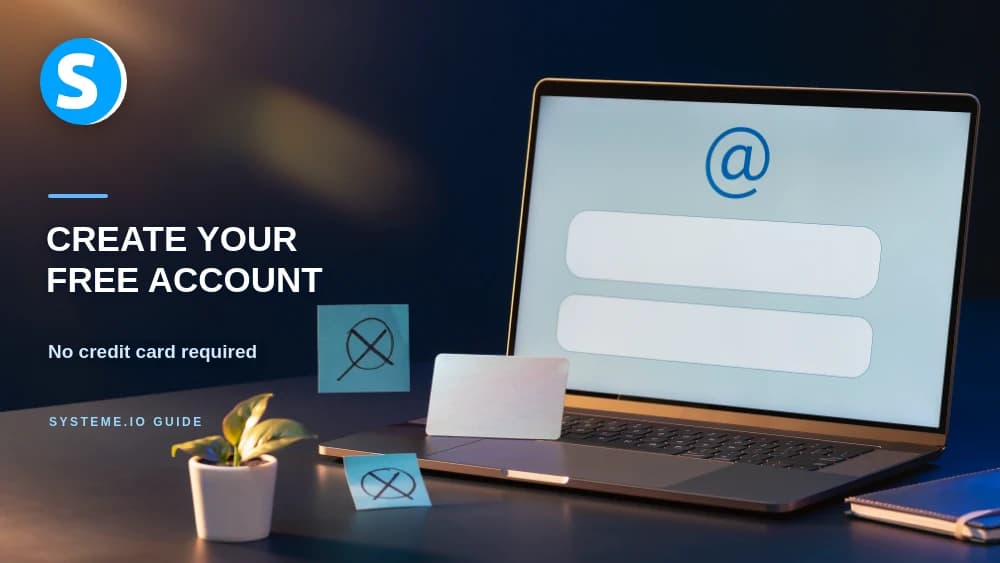
Yes. Systeme.io currently offers a permanent $0 Free plan with no credit card required, so you can build a real workflow before deciding whether a paid tier is necessary.
Yes, you can start on the free plan without entering a card
Systeme.io currently lists a $0 Free plan and states that no credit card is required. That removes one of the main barriers for people who want to explore the platform without starting a paid subscription.
Instead of judging the software from a feature checklist, create a small version of the workflow you actually expect to use. Build one page, collect a contact, send an email, and connect the next conversion step. That tells you far more than browsing the dashboard for a few minutes.
The free plan is large enough to validate the core workflow
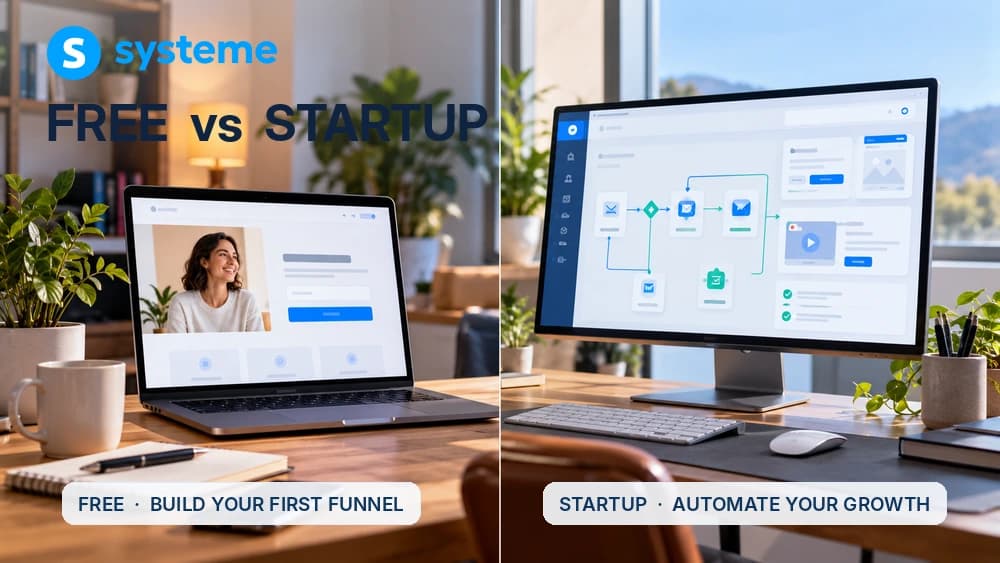
The current Free plan includes up to 2,000 contacts, three sales funnels, one automation rule, one workflow and one custom domain, alongside the platform’s core tools. The limits are lower than on paid plans, but they are sufficient for a genuine proof of concept.
For an early test, focus on four questions: can you publish the page you need, capture a lead, send the right follow-up, and move that lead toward your offer? If those four pieces work, you have already validated the most important part of the system.
Pay only when a specific limit or feature becomes relevant
Starting without a credit card does not mean every resource is unlimited. Startup, Webinar and Unlimited raise contact, funnel, automation and domain limits, while Webinar also adds evergreen webinar capacity.
The useful upgrade trigger is therefore concrete: you are approaching a limit, you need a feature that the Free plan does not provide at the required level, or the workarounds are starting to cost more time than the subscription.
Test a real mini-offer before increasing your software budget
Create a landing page, a short email sequence and a sales or offer page. Use a real offer if you already have one, or a realistic test offer if you are still preparing your launch.
This exposes friction quickly. You may discover that the free capacity is enough, or that a specific bottleneck justifies moving to Startup. Either outcome is more useful than upgrading in advance because you assume you will need more capacity later.
The free plan makes the most sense while traffic is still small
When traffic and lead volume are limited, paying for additional capacity rarely improves conversion by itself. The priority is usually the offer, the page, the emails and the path from first visit to the desired action.
Once you have real sign-ups or sales, you can see which limitation is actually slowing you down. At that point, the paid plan becomes an operational decision rather than a precautionary purchase.
Best approach: open the account, build one complete path, then decide
If your main concern is being charged before you know whether the tool fits, the Free plan removes that concern. You can start without a card and stay on the free tier while its limits cover your use case.
Build one representative funnel from start to finish. Upgrade only when a measurable need appears. That keeps the decision tied to your business rather than to the size of a pricing table.
Check these four signals.
✓You want to explore the platform before paying
✓Your traffic and contact volume are still small
✓You want to test pages, email and automation on a real use case
✓You prefer to upgrade only after finding a specific limit
The safest way to choose is to build a small real-world workflow.
Test the part of the customer journey that matters most before moving your entire system.
Official sources for this guide
Software pricing and features can change. Review the official documentation below before choosing a product or plan.